
On this 250th anniversary of our nation’s founding, the political world took to the tiny, windswept enclave of Medora, North Dakota to celebrate the opening of the Theodore Roosevelt Presidential Library–honoring America’s “conservation president” on the very same plains where he earned his stripes as a cowboy.
Or, I should say, the right-wing political world took to these plains. For whenever a conservative wishes to engage in matters relating to the natural world, they always invoke Teddy. Incessantly. “He did it” they say; therefore conservation is somehow automatically ingrained within the Republican party platform.
As “because he did it” becomes a questionable justification once one exits the middle school playground, conservatives need to ask themselves if there is not indeed something more besides Roosevelt’s actions that they can rest their laurels on.
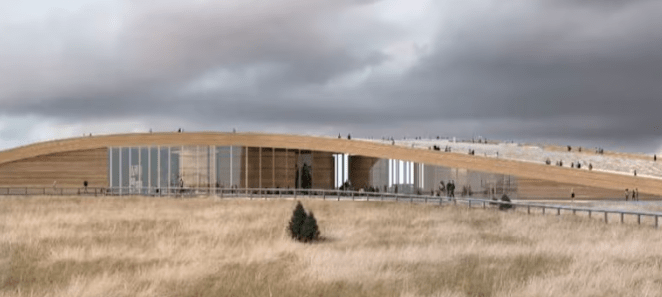
The Theodore Roosevelt Presidential Library
Was Roosevelt not one who spoke of the “elemental virtues” of “honesty and efficiency…consideration and fair dealing” in all he did? Did he not rail against “that ancient license” of “individualistic materialism…the complete freedom for the individual” throughout the pages of his autobiography? Did he not also emphatically declare that “human nature does not change”; that happiness comes “only with labor and effort and self-sacrifice?”
Clearly, there were underlying principles at work animating Roosevelt’s conservation ethos.
The conservative is the model of a conservationist not because of the actions of a single man 120 years ago, but because he believes in limits just as the natural world is limited. The conservative believes there is an inherent form and function to the world around him–both natural and human–and moderates his actions to fit within that frame.
This, the liberal does not do. The cause of liberalism is freedom from restraint and the pursuit of individual aims according to individual whims. Liberalism is ideological, abstract, and artificial; it begets entropy. But the natural world is inherently limited, stable and in equilibrium. It is organic, objective, and principled; it is ordered.
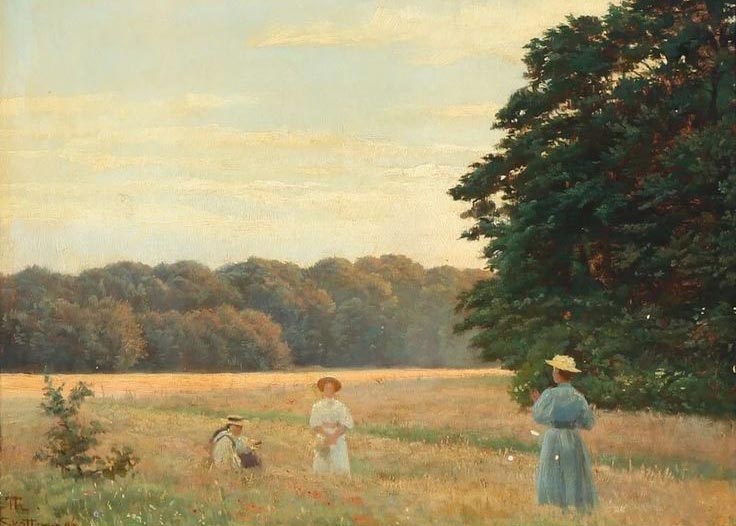
Carl Thomsen, “Landscape with Girls Picking Flowers in a Meadow”, 1896
In other words, liberalism is anathema to the responsibility required for conservation. Completely and utterly so.
James Krueger put it bluntly in The Disfiguration of Nature by writing that the progressive makes herself a fool by her confusion–her belief “that earth-care is somehow congruent with a liberal, progressive agenda when the task at hand is anything but expansive and progressive.”
But yet, what do we ever hear about limits from the right today? Who will stand to defend true, limited principles? The right is filled with those who mock the name of conservatism by their association–the libertarians and economists, the talking-point Republicans and free-traders–those who think conserving individual choice is conservation enough.
As Krueger shrewdly writes, “many of the values and standards forming the normative fibers of American liberal thought grow out of an inherent disdain for the routine limitations of nature.” That goes for the classical liberals and their fantasies of “unlimited growth” (really, you call yourself a conservative yet that is one of your main economic tenets?) and godless progressives alike.
Many liberals decry the “tragedy of the commons.” They brand it a market failure and go no further, declaring it the fault of the conservative (by the modern, confused definition). But the angry liberal does not think to pull the curtain back yet more; he stops short, preferring to level his disdain at the capitalistic patina that lies over the liberal roots of the modern order.
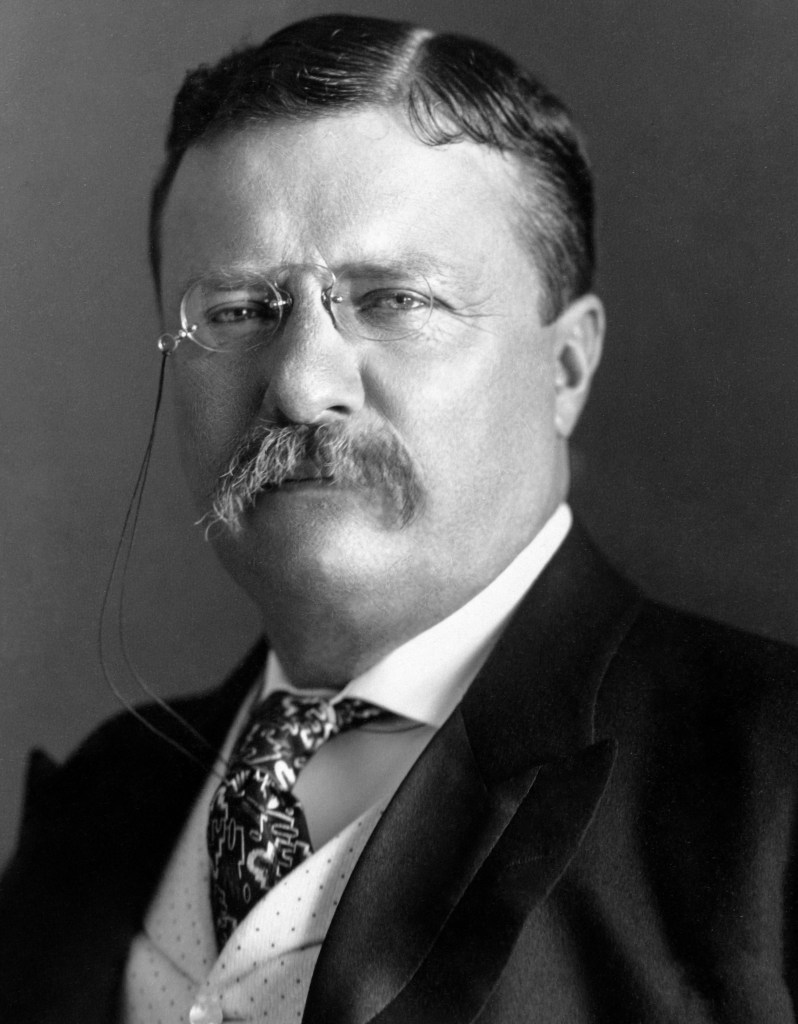
In a telling association, Roosevelt himself was quite against laissez faire economics. He was also fervent in his belief that order requires responsibility and duty. He hated radical individualism, in his day espoused by Woodrow Wilson and his ilk, and declared “unrestricted individualism spells ruin to the individual himself.” And in a phrase that reads straight from Burke, he emphatically pronounced that “a right is valueless unless reduced from the abstract to the concrete.”
Yet one is surprisingly hard pressed to find such things meaningfully uttered from any corner these days, other than by the routine and banal think-tank or media circuit types who say such things on autopilot with a glaze over their eyes. Perhaps this is why they time and again resort to invoking the name of Roosevelt in environmental matters–forgetting they are supposed to believe in limits, they think he is all they have to stand upon.
And so it is time for those who call themselves conservative to act like it and confidently proclaim what they know to be true: conservatism is the only true land ethic because it is the only ethic that proscribes limits, responsibility, and order–the operating language of the natural world.
They can still invoke Roosevelt (he deserves it), but need to know that what needs be emphasized is not the man, nor his actions, but the convictions that underpinned them.
By Evan Patrohay


Leave a Reply