
I will destroy the wisdom of the wise; the intelligence of the intelligent I will frustrate. ~ Isaiah 29:14
The heart is deceitful above all things and beyond cure. ~ Jeremiah 17:9
I have been reading philosopher Yoram Hazony’s Conservatism: A Rediscovery of late. Through this study I have been amazed at the degree to which the liberal paradigm goes against all clearly and empirically verifiable aspects of history and nature. Much ink has been spilled discussing the differences between liberalism and conservatism, two frameworks that have become twisted and confused over the centuries (the popular disappearance of conservatism’s moral roots–as well as its identification as essentially synonymous with classical liberalism and/or ‘the market’ is a clear indication of this). Today, I want to discuss the former.
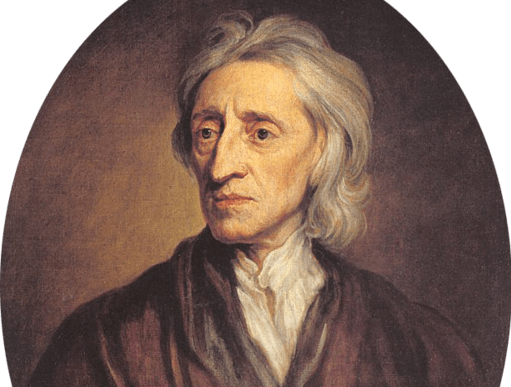
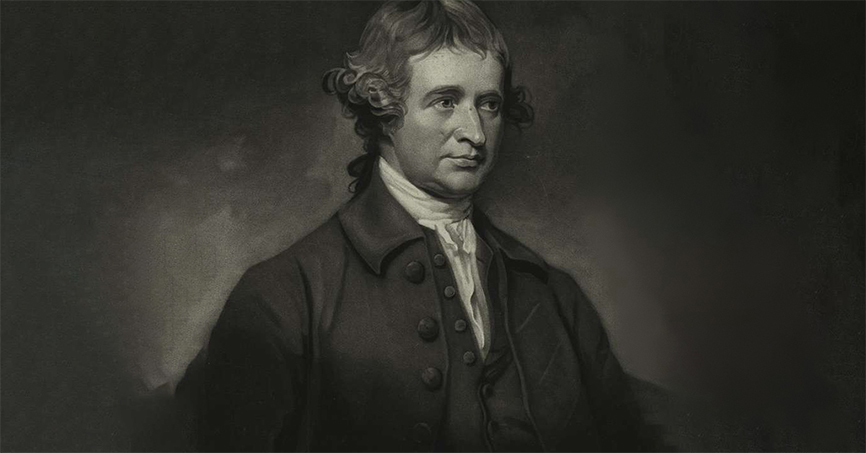
John Locke (left) and Edmund Burke (right) are among the two most influential “founders” of the liberal and conservative ideologies respectively.
Hazony identifies the philosophical idea of “liberalism” at base as “universal rationalism.” If one studies the original liberal philosophers, such as John Locke, Thomas Hobbes, Jean Jacques Rousseau, or Adam Smith, their works are built upon the premise that through reason mankind can derive all solutions to its problems. This reason, it is important to note, is theoretically able to be grasped by all men, as Locke famously wrote that it is accessible to “all mankind, who will but consult it.” Critically, such reasoning is deductive. It builds its conclusions upon universal axioms and general principles and thereby generates conclusions universally applicable to all mankind.
The universal rationalism aspect of the liberal paradigm is the seed from which untold degrees of harm and chaos have been wrought, from the havoc of the French Revolution, to the uncompromising ideological terror of Marxist dictatorships, to the relentless pace of an indifferent globalism that erodes basic human ties.
The liberal principle of universal rationalism stands in contrast to what Hazony calls the “historical empiricism” of conservatism, an inductive reasoning process which proposes that “political knowledge is gained by examining the long history of the customary laws of a given nation and the consequences when these laws have been altered in one direction or another.” In comparing the two, Hazony writes, “rather than arguing from the historical experience of nations, rationalists set out by asserting general axioms that they believe to be true of all human beings…from these, they deduce the appropriate constitution or laws for all men.”
By grounding liberal philosophy in the farce of universal objective reason, its founders and today’s modern liberal descendents alike (including those who mistakenly call themselves “conservatives”) have methodically attempted to produce lasting solutions out of the untenable prospects of what is ultimately a subjective thing. For as anyone who has paid a bit of attention to his fellow men could tell you–all people reason differently. Liberalism has proven time and again the inferiority of the human mind alone to rationalize solutions out of its own power, the reductionism that such a philosophy necessarily entails, and that abstractions are a weak foundation for approaching institutional and cultural issues featuring traditions that have been built over centuries.
What Hazony does excellently in his book is trace the battle between liberalism and conservatism in the early United States and connect it to today’s issues. What one discovers is that the dividing line between the paradigms can be clearly seen from the very beginning, when it was the Federalists (conservatives) against the Jeffersonian Democratic Republicans (liberals).
Federalists such as John Adams, Alexander Hamilton, and George Washington recognized that the American people were products of British institutions and traditions that evolved over centuries, and as such wisely incorporated them (like the concept of a unified nation, a powerful executive, a bicameral legislature, and a strong judiciary) into the new American Constitution of 1787. The Democratic Republicans, typified by Thomas Jefferson, on the other hand believed “political society was founded on the virtue and natural rights of the consenting individual, who owed little or nothing to national and religious tradition.”
The Federalists, valuing the distinct traditions and nationhood given to them, favored as a consequence economic nationalism, a nationalist immigration policy, and the prevalence of religion in society–values shared by conservatives today. The Jeffersonians valued free trade, lax immigration policy, and were in favor of suppressing Christianity, if not outright hostile to it. Therefore, despite the undeniable eloquence and prestige of Thomas Jefferson, his faulty and abstract liberal reasoning sowed the seeds of much of the chaos and radicalism that we witness in the United States today.
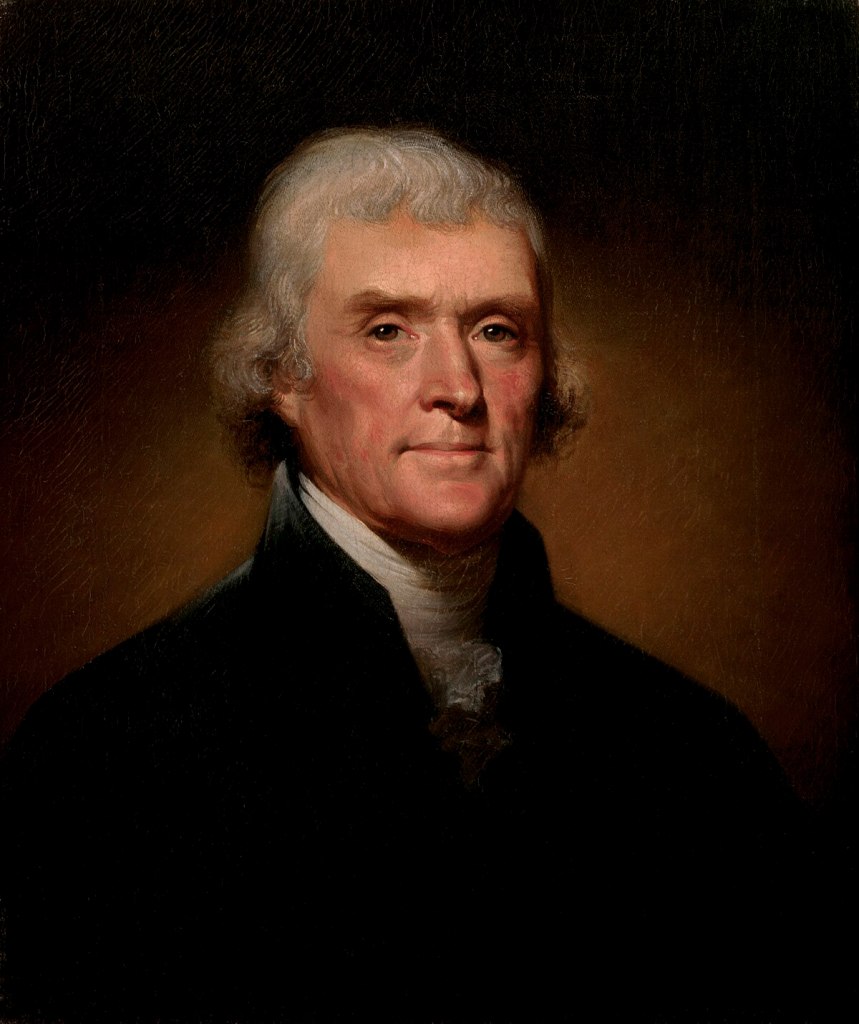
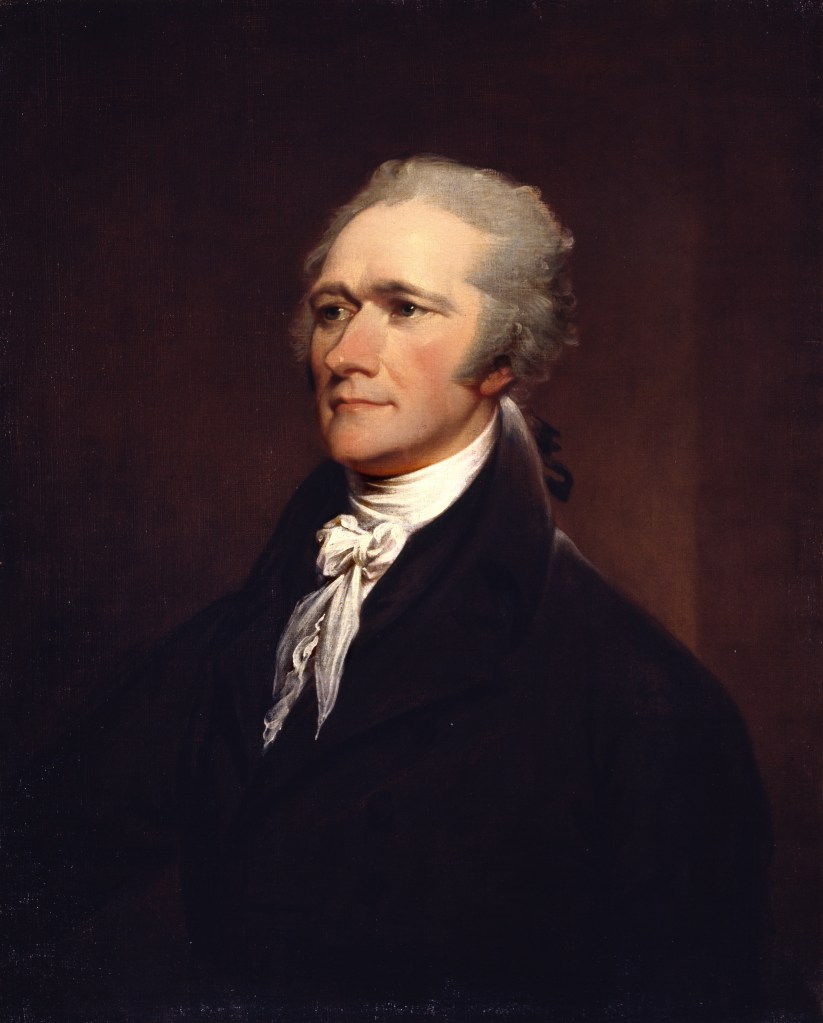
Thomas Jefferson (left) and Alexander Hamilton (right) were two of the most vocal proponents of the Democrat-Republican and Federalist platforms respectively.
Why do we think there has been such a radical push for “diversity” on the American left? It is a reaction to the clear consequence of their ideas–that a universal “reason” makes all things universal, and all things are therefore becoming alike.
Why do we think there have been such fervent cries for a dissolution of borders and laissez faire immigration policy on the American left? Because “reason” by definition has no loyalties or ties, and therefore the idea of cultural assimilation–that “newcomers [become] Americans before they [become] American citizens” in Hazony’s words–is therefore offensive.
Federalists, like today’s conservatives, believed alongside the historical empirical tradition that citizenship arises from shared traditions and values. Hazony quotes the wise words of Alexander Hamilton (a Federalist) on the subject of immigration:
“The safety of a republic depends essentially on the energy of a common national sentiment; on a uniformity of principles and habits…and on that love of country which will almost invariably be found to be closely connected with birth, education and family…To admit foreigners indiscriminately to the rights of citizens the moment they put foot in our country would be nothing less than to admit the Grecian horse into the citadel of our liberty and sovereignty.”
Hamilton’s Jeffersonian opponents, on the other hand, agreed with John Locke (and today’s liberals) that citizenship is more or less voluntary, that a “nation” is merely a collection of individuals who have agreed to live there. The social contract theory of government propounded by Locke, Hobbes, and Rousseau–where people “agreed” by contract to be governed at some obscure point in the past–all but guarantees this outlook. As Hazony bluntly puts it, “the liberal paradigm is blind to the nation.”
The gall of the liberal philosophers and their intellectual descendants, who propound inane, harmful, and absolutely unproven abstract theories that discount and erode the diverse beauty and history of all nations, all while it can be plainly observed that nations are truly nations because of their shared principles, history and culture, stinks to heaven.
Why do we think there has been such a push for “free trade” and outsourcing jobs to other countries for the sake of profit while American employment disappears and localities crumble? Because “reason” places a sacred weight upon individual liberty. It does not care about the detrimental consequences of this pursuit of freedom, nor does it place any restrictions (such as filial obligations, responsibilities, or, say, a general pretense of morality) upon them. The individuals that run the world’s major corporations want to outsource manufacturing to sweatshops to increase their profits, and by God they will, even at the expense of those who share their home.

Credit: Washington International Trade Organization
We see this manifested today in the almost bewildering degree to which our leaders will sacrifice American interests for those of other nations, whether it be for another war that Israel desires to start, for an eastern European nation that few could mark on a map, or by letting adversarial nations like China off the hook economically.
Why is the United States perpetually mired in forever wars against nations with whom we share hardly any ties? Because those who believe in so-called “universal rights” have an obligation to spread them universally. Speaking like a true radical in a commentary on the French Revolution, Jefferson in fact described recognition of the universal rights of man as the “true faith.” Just as Jefferson admired the anarchical French Revolution and its bloody pursuit (and eventual worship) of the abstract principles of human reason, so do today’s liberals revel in bloody exercises of nation-building far from home.
I believe that few if any liberals recognize that it is their professed ideology, and its abstraction from any strings of national or moral affiliation, that has contributed to some of their own most major professed issues. Issues such as corporate greed, war, and environmental degradation are all made worse when individuals are encouraged to pursue their wishes without limits. I hope that some will recognize this common ground and move to the conservative side.
And so we must ask why liberalism appears to always be on the wrong side of history and why it continues to brazenly proclaim that it knows best despite clear evidence that it doesn’t. To put it simply, liberalism is always on the wrong side of history because it does not care about history. It myopically believes it knows best because it–subliminally or otherwise–turns individuals into their own gods. It has harmed the collective good because it only cares about the self.
And this is ultimately why I believe the liberal paradigm has wrought such chaos and harm. Throughout Scripture we are warned of the limits of human wisdom–indeed of its folly. Christ proclaims in Matthew 11:25 that God has “hidden these things from the wise and learned, and revealed them to little children.” Because humans are sinful, an ideology based upon the sheer power of human reason alone to solve all ills is destined for failure. It is destined to beget a multitude of sins.

Christ teaching a little child. Credit: The Chosen
Perhaps this is ultimately why the largest proponents of liberalism throughout history have been amongst the most vocal against God and violent against His Christian people. Why Jefferson sought to rewrite the Bible according to his logic, why the French revolutionaries destroyed the Church to create their own ‘Cult of Reason,’ why Marxists have without fail systematically persecuted Christians wherever they have been in power, and why polling indicates the majority of liberals today are avowed atheists.A survey through history, and an observation of today’s modern brokenness, indicates that something needs to change. It is time for us to learn, however painfully, that we can no longer be our own gods. The allure of the powers of deductive human reason is strong, but it will only lead us further down broken roads. We must instead apply our reason inductively to what can be gleaned from those who came before us–their victories, their mistakes, and their wisdom, proven and recorded over the ages–to forge the best path forward for us and our people.
By Evan Patrohay

 Thoughts of an Environmental Conservative
Leave a comment