
The modern environmental movement prides itself on the connection it has drawn between environmental health and social health, manifested in ubiquitous calls for “environmental justice.” At best, this movement amicably recognizes that the poor should not suffer an undue burden of pollution and heavy industry. At worst, it is seized upon by parties who see environmentalism as a Trojan horse for radical Marxist aims and the destruction of Western civilization. Consider the group Anthropocene Alliance, who shouts “conservation equals emancipation!” or scholarly articles which declare that the environmental challenges of our time must be “leveraged” to address “long-standing structural barriers that continue to obstruct systemic shifts in practice.”
Whether radical or not, nearly all who advocate for environmental justice appear to do so from a place of anger and frustration instead of love. I sympathize with this frustration, as it stems from the pervasive brokenness and injustice of the world; a brokenness which seems to persist no matter the best efforts of mankind.
The intellectual connection between things natural and social espoused by the modern environmental movement appears to be just that: modern. But it is not a new idea. The Church, grounded in Scripture and tradition, has taught and exegeted the intimate connection between the human and ecological for centuries. Long before the environmental movement came into being, its leaders, saints, and laypeople alike articulated this brokenness, and the requisite path to healing, more clearly than any social advocate today.
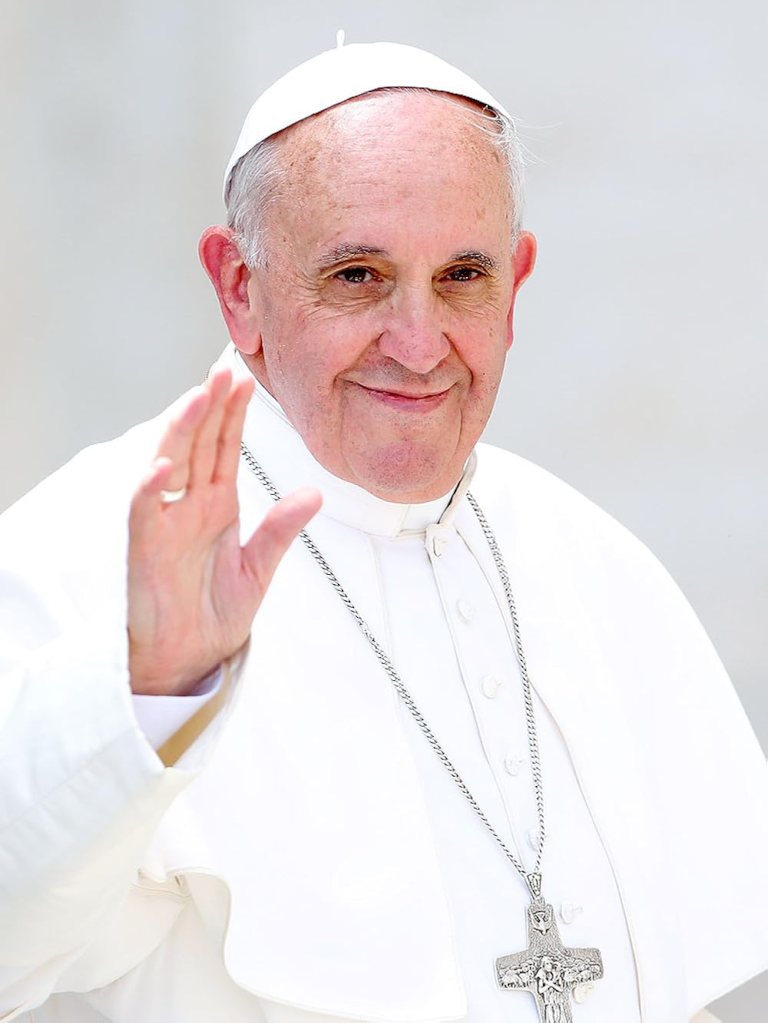
Pope Francis summarized the Church’s teaching of what he calls “integral ecology” in the encyclical Laudato Si.
But this intellectual heritage of the Church, expressed no less frequently in modern times, is often forgotten because its principles are anathema to the modern world. For instead of being founded upon social grievances and political movements, it is founded upon love and humble obedience to God.
Pope Francis, in his encyclical Laudato Si, comprehensively addressed the Church’s teaching on this matter by using a phrase he calls “integral ecology.” Integral ecology recognizes that “the deterioration of nature is closely connected to the culture which shapes human coexistence” and that “there can be no ecology without an adequate anthropology.” It declares that how we treat the most vulnerable in society and how we treat nature both stem from a centrist and selfish view of mankind’s role in the world; that all relational issues of sex, the family, poverty, and abuse are “indivisible” from how we relate to nature. This is because the Book of Genesis teaches that human life is based on three mysteriously but undeniably connected and fundamental relations: with God, with our neighbor, and with the earth itself.

Pope Benedict XVI also wrote extensively on man’s relation with the natural world.
Pope Benedict XVI sharply pinpoints the ultimate cause of our social and environmental disharmony. He wrote that creation is harmed “where we ourselves have the final word, where everything is simply our property and we use it for ourselves alone. The misuse of creation begins when we no longer recognize any higher instance than ourselves, when we see nothing else but ourselves.”
Popes Francis and Benedict XVI teach us that it is the pervasive utilitarian view of the modern world that begets the social and ecological brokenness we see around us. Such a utilitarian lifestyle is manifested from a human-centric worldview that emphasizes being useful rather than simply being. The roots of our modern social and environmental woes therefore do not lie with a particular political system, mode of education, or any other means. It is instead, in the words of Pope Francis, because of “our presuming to take the place of God and refusing to acknowledge our creaturely limitations.”
Note the present-continuous tense of the Holy Father’s words. Though the ultimate cause of our disunity came from the Fall in the Garden of Eden, where Adam and Eve decided to turn away from God’s command to instead satisfy their desires, we persist in the same selfishness today. This is why modern environmental movements bear little fruit and multiply their frustrations no matter their efforts: no political victory will reverse the underlying cause of our brokenness, which is sin.
Modern environmentalists, though they may recognize the limits of nature, they do not often extend those same limits to mankind. We hear everywhere of how new technologies will save us: “renewable” energy, “more efficient” cars, even “carbon-capture” devices. Certainly, these may help in a material sense, but a technology-centric culture will ultimately do nothing but reinforce the human-centric impulses that have led to our disunity with God and nature. As Joseph Ratzinger wisely wrote:
“In the technological world, which is a self-made world of man, one does not immediately encounter the Creator; rather, initially, it is only himself that he always encounters. The fundamental structure of this world is feasibility, and the manner of its certainty is the certainty of what can be calculated. Therefore even the question of salvation is not geared to God, who appears nowhere; rather, once again it is geared toward the ability of man, who wants to become the engineer of himself and history.”
As written in The Liturgy of the Land, the more we are surrounded by human technology and depart from what God has made, “we are more and more left with the only thing that man has really ‘created’ solely from his own being, which is sin.” Technology, as noted by philosophers down the ages, easily wooes us into believing that we can overcome any limit or any struggle solely by our own efforts. That conviction lies at the heart of the modern environmental movement: that some arrangement of technology, political policies, laws, and mandates will be what reconciles us with the natural world.

We are repeatedly warned that relying on technology to solve our environmental woes ultimately means relying on man’s own capabilities to solve problems he created via sin. Photo credit: Sharp Magazine
Ultimately, however, true healing of our relations to the land requires humanity to recognize its limits and that it has no right to treat itself as an earthly god. It also requires a faith in and recognition of the One we are in reality subordinated under. Otherwise, there is nothing that can guide mankind on how to conduct and maintain healthy relations with nature; we would always be left with the same disharmonious human impulses. True reconciliation with the land is therefore impossible without humble obedience to God and an understanding of His natural law.
As Pope Francis writes, “The best way to restore men and women to their rightful place, putting an end to their claim to absolute dominion over the earth, is to speak once more of the figure of a Father who creates and who alone owns the world. Otherwise, human beings will always try to impose their own laws and interests on reality.”
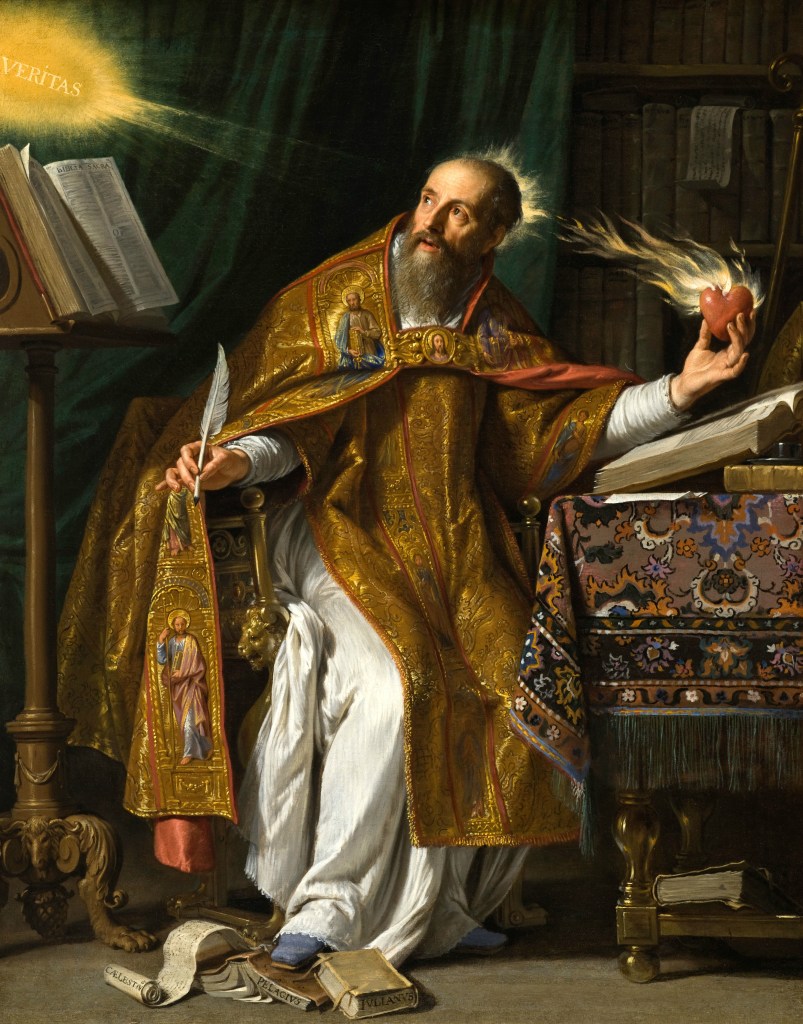
St. Augustine decided to not use the word cultus in describing the act of Christian worship due to its blending of devotion to God and the land, but it well encapsulates the idea of integral ecology.
This teaching echoes through the ages, from the popes of the 20th century to the English Catholic Land Movement of the 19th. Its themes resound in the writings of St. Aquinas and the love of St. Francis of Assisi, who sought a return to innocence via reconciliation with the earth and its creatures. It is even present in the early Church, as its fathers considered the Latin cultus, from which the English words “cult” and “cultivate” are derived. As the authors of The Liturgy of the Land write, the word “holds together a sort of holy tension between heaven and earth…[it] can refer to the worship of God and the work of the land.”
The Church in its wisdom recognizes what no one else in the environmental movement does, that we are meant to worship God both by looking up and by working the land on earth. Only through the recognition, acceptance, and practice of integral ecology, where God is placed at the center of all our human and natural relations, will these relations be restored to glory.
By Evan Patrohay
 Thoughts of an Environmental Conservative
Leave a comment