
In former president Donald Trump’s Republican National Committee nomination acceptance speech, his first since being miraculously saved from his assassination attempt a mere five days before, he hinted on his planned American energy policy. Enthusiastically, he summed his policy in three words: “Drill baby drill.” To no doubt the shock and ire of his Democrat competitors, at these words the RNC erupted into applause and standing ovation.

In an era where fears of fossil-fuel driven climate change are rampant, these words are liable to make much of the American population uneasy, at best. But clearly, such words also resonate with a sizeable constituent. Such a policy is not necessarily all bad from a climate change perspective, as I will seek to show here.
Former President Trump at the RNC, Andrew Harnik/Getty Images
But importantly, in order to have the greatest benefit to the American people and drive emission reductions, it is very important that Trump make this policy one of many in an all-of-the-above energy approach.
First, to the benefits of drill baby drill. Donald Trump has repeatedly touted his success at making the United States energy independent during his presidency. During the glut of oil that this period created, I remember gas prices dropping to a mere $1.80 in my then-home state of Pennsylvania. After decades of Middle Eastern wars which cynics blamed on America’s need to ensure a steady supply of oil from friendly countries, and just years before a European war which subsequently took Russian fossil fuels off the market, fostering American energy independence does have strong merit. Enabling ourselves to be self-sufficient in energy means less reliance on notoriously anti-democratic fossil fuel-rich countries in peaceful times and avoidance of potential restrictions in wartime. To say the least, we do not want to repeat the embarrassing OPEC oil embargo of the 1970s, which my parents’ generation lived through.
Secondly, the United States possesses the greatest estimated oil reserves out of any country in the world and the fifth greatest estimated natural gas reserves. If we desired to become energy independent using only fossil fuels (oil, natural gas, and coal)—which in 2023 accounted for 84% of energy consumption nationally—we certainly could.

Oil refinery, Art Wager/Getty Images
And now for the most surprising and little-discussed benefit of drill baby drill: American fossil fuels are largely cleaner than that of most other countries. The United States has reduced emissions by 21% since 2005, and 60% of this reduction in the electricity-generating sector has come from the switch to natural gas, which is far cleaner than its oil and coal counterparts. The same can’t be said for other sources of fossil fuels. In Venezuela for instance, where the Biden Administration eased sanctions in order to provide more oil in the wake of its disastrous energy policies, reserves produce several times more methane per unit than nearly any other source. Given the giant role of natural gas in US emissions reductions, American fossil fuels clearly still have a role to play in our energy transition.
Combining these truths with the fact that nearly 1.7 million US jobs are supported directly by the fossil fuel industry, it is not surprising that a sizeable portion of Donald Trump’s constituency favors increased drilling. But critically, to truly benefit the American people, American drilling must be prudently combined with other cutting-edge energy technologies to further reduce our emissions and increasingly wean ourselves off the materials and technologies of other adversarial countries.
If the United States decides to continue investing in fossil fuel production, it must do so alongside heavy and sustained investment in green technologies. China, our greatest adversary, produces 80% of the world’s solar panels and two-thirds of its electric vehicles, wind turbines, and lithium-ion batteries. China also refines nearly 90% of the global supply of rare earth metals, which are critical for technologies both green and otherwise. This incredibly successful cornering of the market is the result of decades of intentional Chinese investment and decision making. The global momentum towards green technologies is here to stay; China sensed this years ago and prepared for it.
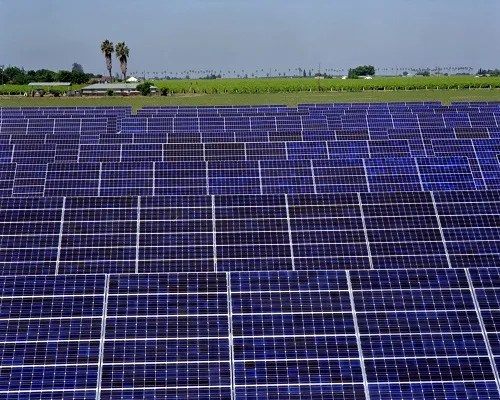
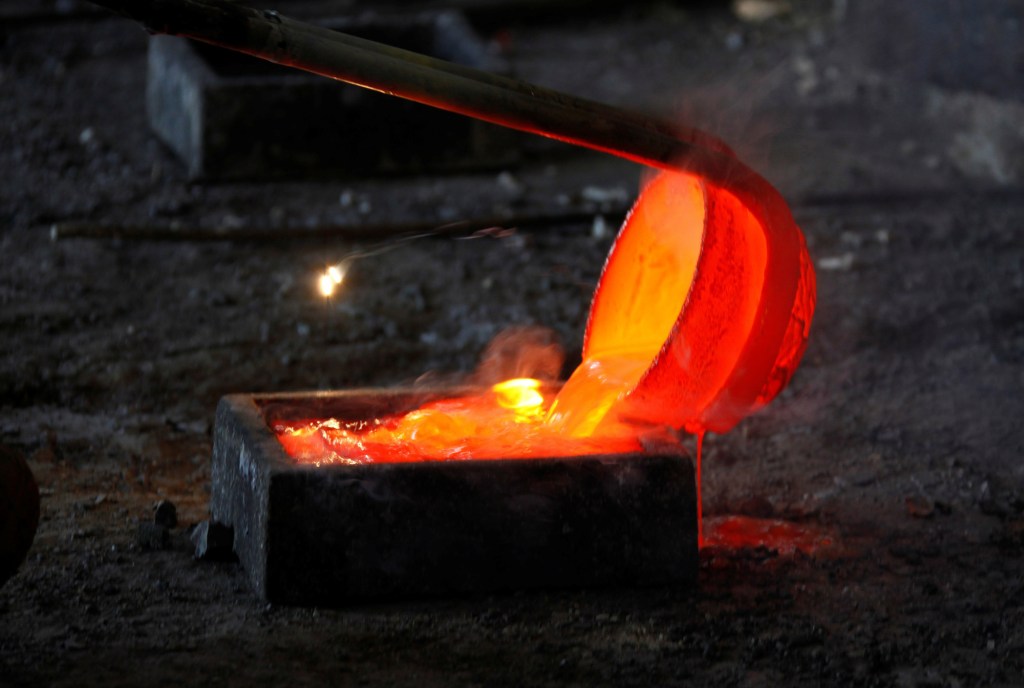
Solar Panels, NREL; Rare Earth Processing, REUTERS/David Gray/File Photo
Which, of course, means the West is playing catch-up. But just because China has dominated green technology production in the 2020s does not mean that the US and its allies cannot dominate in the 2030s. Donald Trump is a prudent businessman who wants the United States to win everywhere it can, and the green technology sector is a new frontier ripe for the taking. American dedication and ingenuity are unparalleled throughout the world, and with the right funding and incentives, the United States can unleash its own green technology revolution. This is important for both us and the globe—as the United States only accounts for 14% of worldwide emissions, a carbon-free future requires emissions reductions from other countries.
These nations need cheap green technologies to do so, and there is a strong desire for a friendly democratic nation to produce such technologies. America can fill that role, as it has for so many technologies. But increasing research, development, and production capacity to the scale needed takes significant time. We therefore cannot afford to lapse on their investment, even for four years.
Just because China has dominated green technology production in the 2020s does not mean that the US and its allies cannot dominate in the 2030s.
The path to emissions reduction in the United States is not a straight one, and each source of energy (wind, solar, hydropower, nuclear, fossil fuels, etc.) has strengths and weaknesses that make it the smartest choice for different sectors of our economy. In the words of American Conservation Coalition founder Benji Backer, “the race toward clean energy is not a one-way track with a single finish line. Rather, it is more like an ongoing relay race in which all contenders…participate as members of the same team, passing the ball back and forth to one another whenever it makes sense to do so.” In power generation, for example, it is wise to choose sources which will provide a constant source of electricity, like nuclear, fossil fuels, or hydropower. For operations performing on a smaller scale, wind and solar become more appealing.
This means “drill baby drill” can have a place in America’s energy future, but it must be prudently incorporated as just one runner in the race. Such a policy can provide relatively clean American energy independence and support thousands of well-paying American jobs, but it must not be done in lieu of other investments in green energy. The world is searching for a nation that can lead it towards a clean future, and with prudent investment, potential future president Donald Trump can do so.
By Evan Patrohay

 Thoughts of an Environmental Conservative
Leave a comment